
How to use
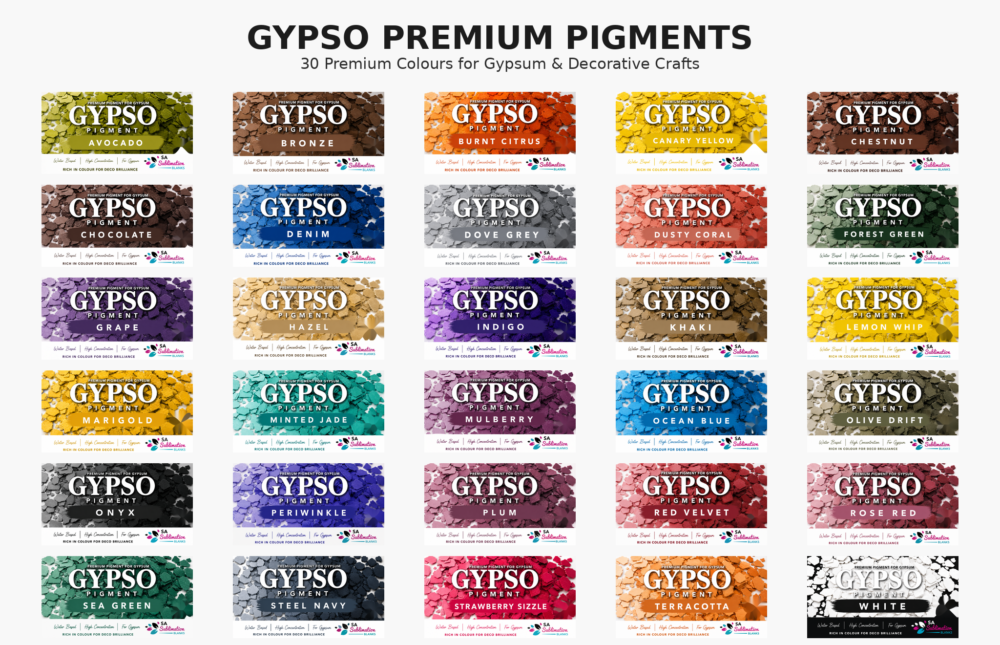
• Shake well before use, as pigments may naturally settle over time
• Start with a small amount of pigment and gradually increase until the desired shade is achieved
• Because gypsum powder is naturally white, colours will initially appear lighter and more pastel in tone
• Additional pigment can be added to deepen the colour and increase saturation
• For best results, calculate pigment additions as a percentage of your total gypsum powder weight
• As a general guide, start with 1%–3% pigment based on the dry gypsum weight and increase gradually if a stronger colour is desired
• Always test small batches first to evaluate colour intensity and curing performance
• Ensure the pigment is fully dispersed throughout the mix before pouring into moulds
• Allow the piece to cure completely before judging the final colour, as gypsum naturally lightens as it dries
• View finished pieces under different lighting conditions, as colours may appear slightly different under natural and artificial light
Working with different gypsum formulations
• Different gypsum formulations react differently to pigments and colour loading
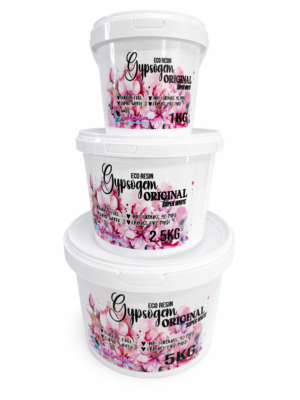
• Our Gypsogem Eco Resin Original Super White performs best with lighter pigment additions and softer colour loads
• Higher pigment concentrations may affect the way Original White mixes, cures, and distributes colour throughout the piece
• For bold, vibrant colours and higher pigment loading, we recommend our Gypsogem Eco Resin Premium, which has been specially developed to work exceptionally well with concentrated pigments
• Premium allows for stronger, richer, and more consistent colour results while maintaining excellent casting performance
• Even when using the same pigment, different gypsum products may produce slightly different colour results due to variations in chemistry, porosity, particle size, and curing characteristics
Pro tips
• Use filtered, distilled, or rainwater where possible for the most consistent results
• Mix by weight rather than volume for improved colour accuracy and repeatability
• Keep your mixing ratios consistent between batches
• Avoid excessive pigment loading, as this may affect strength, curing time, and overall performance
• Test colours on small sample pieces before producing larger projects
Mould staining
• Some highly concentrated pigments may cause temporary staining of silicone moulds
• Staining is influenced primarily by pigment type and concentration rather than the gypsum itself
• Overloading pigment increases the likelihood of staining
• Clean moulds promptly after demoulding to minimise residue build-up
• Always test unfamiliar pigments before use on production moulds
Weight disclaimer
• All products are packed using digital scale
• Packaging containers are tared (zeroed) before filling to ensure accurate net product weight
• Advertised weights refer to net product weight excluding packaging
• Minor variations may occur when products are reweighed using domestic or non-calibrated scales