
Vacuum Degassing – Important Information
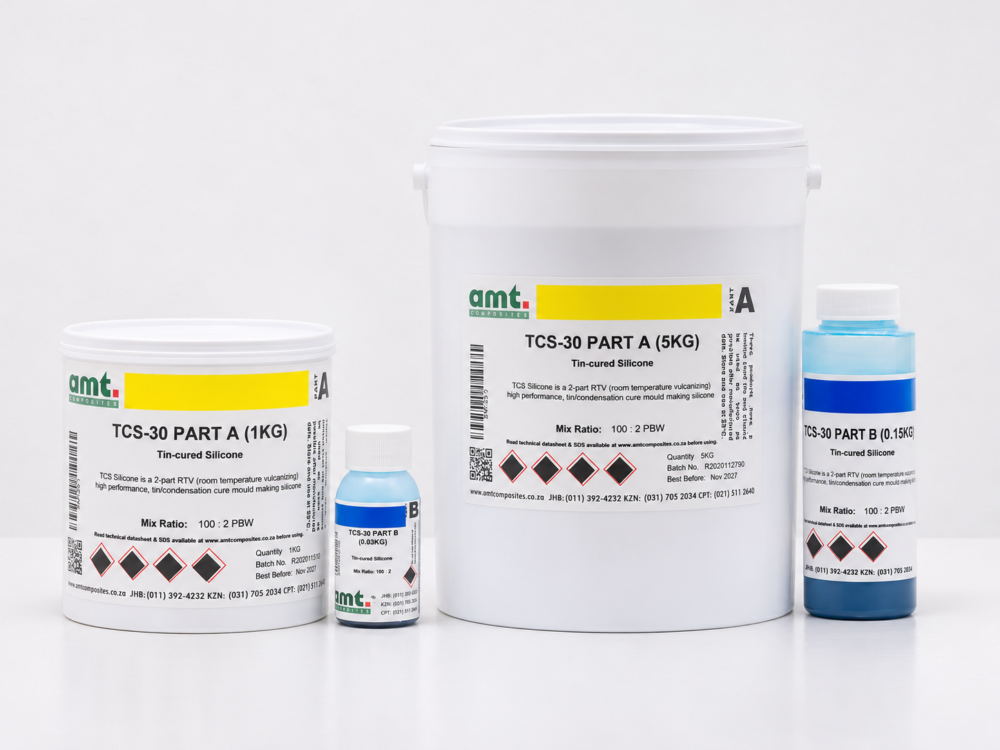
For best results, the use of a vacuum chamber and vacuum pump is recommended when working with TCS-30 silicone.
During mixing, air bubbles can become trapped in the silicone. These bubbles may affect the surface finish, detail reproduction and overall quality of your finished mould.
Vacuum degassing helps remove trapped air before the silicone is poured.
Manufacturer’s recommendations:
- Vacuum Level: 29 inHg (inches of mercury).
- Expansion During Degassing: Allow space for the silicone to expand up to 5 times its original volume.
- When to Degas: After thoroughly mixing Part A and Part B, and before pouring into the mould housing.
- Working Time: TCS-30 has an approximate pot life of 40 minutes, so mixing, degassing and pouring should be completed within the available working time.
Can TCS-30 be used without a vacuum chamber?
Yes, it can be mixed and poured without vacuum equipment, but trapped air bubbles may remain in the silicone and affect the finished mould. For best results without vacuum equipment, mix slowly to minimise air incorporation and pour the silicone in a thin, continuous stream into the lowest point of the mould housing.
Compatible silicone thinner can also be added to help reduce viscosity and improve flow into detailed areas. AMT specifies a maximum addition of 10% by weight. Adding thinner reduces the cured silicone’s hardness and tear strength.
Please note: A vacuum chamber is not included with the silicone kits and must be purchased separately if required.
No Vacuum Chamber? Silicone Thinner Can Help!
For best results, AMT recommends using a vacuum chamber to remove trapped air bubbles from TCS-30 silicone before pouring.
Don’t have a vacuum chamber? You can still make silicone moulds without one!
Adding a compatible silicone thinner (sold separately) can help by:
- Reducing the thickness (viscosity) of the silicone.
- Allowing trapped air bubbles to escape more easily.
- Improving flow around intricate designs and fine details.
- Making the silicone easier to pour into mould housings.
Recommended Usage: Up to a maximum of 10% silicone thinner by weight, as specified by AMT.
Important: Adding thinner will reduce the Shore A hardness and tear strength of the cured silicone. Silicone thinner assists with bubble reduction but does not guarantee a completely bubble-free mould.
For best results without a vacuum chamber, mix gently, avoid whipping air into the silicone and pour slowly in a thin stream into the lowest point of the mould housing.
Available Silicone Thinner Sizes: 100 g, 500 g and 1 kg – sold separately.
Brush-On Mould Applications – Silicone Thixo
TCS-30 can also be used for brush-on mould making, including vertical surfaces.
For brush-on applications, a compatible silicone thixotropic additive (Thixo) can be added to increase the viscosity of the silicone and help prevent it from running down vertical surfaces.
AMT recommended additions by weight:
| Thixo Addition | Consistency |
|---|---|
| 0.5% | Thick |
| 1% | Thicker |
| 2% | Thickest – Maximum Dosage |
Silicone Thixo is different from Silicone Thinner. Thixo thickens the silicone for brush-on applications, while thinner reduces viscosity for poured moulds.
Recommended Silicone Coverage When Pouring
For poured block and cavity moulds, AMT suggests covering the model with at least 10 mm of silicone.
Pour the silicone slowly in a thin stream into the lowest part of the mould housing, allowing it to flow around the model and self-level.
The amount of silicone required will depend on the dimensions, shape and complexity of your mould.
Mould Care & Long-Term Storage
The lifespan of a TCS-30 silicone mould depends on the casting materials used and how frequently the mould is used.
- Abrasive materials such as concrete can wear down mould details more quickly.
- Non-abrasive materials such as wax and plaster are generally gentler on mould surfaces.
- Clean moulds using mild soap and water, rinse thoroughly and allow to dry completely.
- Store moulds on a level surface in a cool, dry environment.
- Reassemble multi-part moulds before storage to help maintain their shape.
- AMT also recommends casting plaster into the mould before long-term storage to help extend mould library life.