

Stencil Vinyl Usage Notes
-
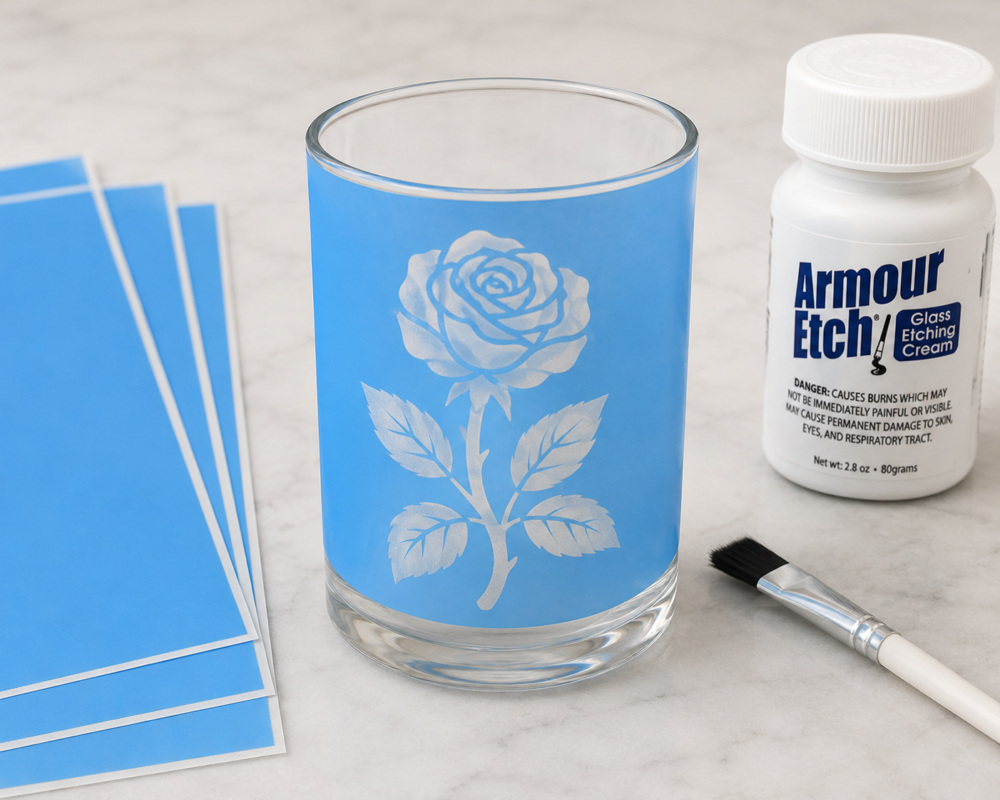
Stencil vinyl needs to adhere firmly to the surface without lifting — especially on curved items such as glassware. If the stencil lifts even slightly, etching crème or paint can seep underneath the design and cause bleeding.
-
Stencil vinyl is best suited for medium to bold designs and may not perform well with extremely small or intricate cut-outs.
-
If the machine does not apply enough pressure or force, the stencil vinyl may tear during weeding. It is always recommended to do a small test cut before cutting your final design.
Additional Tips for Best Results
- Ensure the surface is clean, dry, and free from dust, oils, or fingerprints before applying the stencil.
- Burnish the stencil firmly, especially around the edges of the cut areas.
- Avoid stretching the vinyl when applying it to curved surfaces.
- Use a light to medium tack transfer tape to reduce the chance of lifting the stencil.
- When applying to glass, slightly warming the surface with a heat gun or hairdryer can help improve adhesion.
- Apply etching crème gently — avoid aggressive brushing, as this can force product underneath the stencil.
- For very curved items such as wine glasses, cut small relief slits around the stencil edges to help it wrap smoothly without creasing.
- Remove the stencil carefully after use and wash gently if reusing.